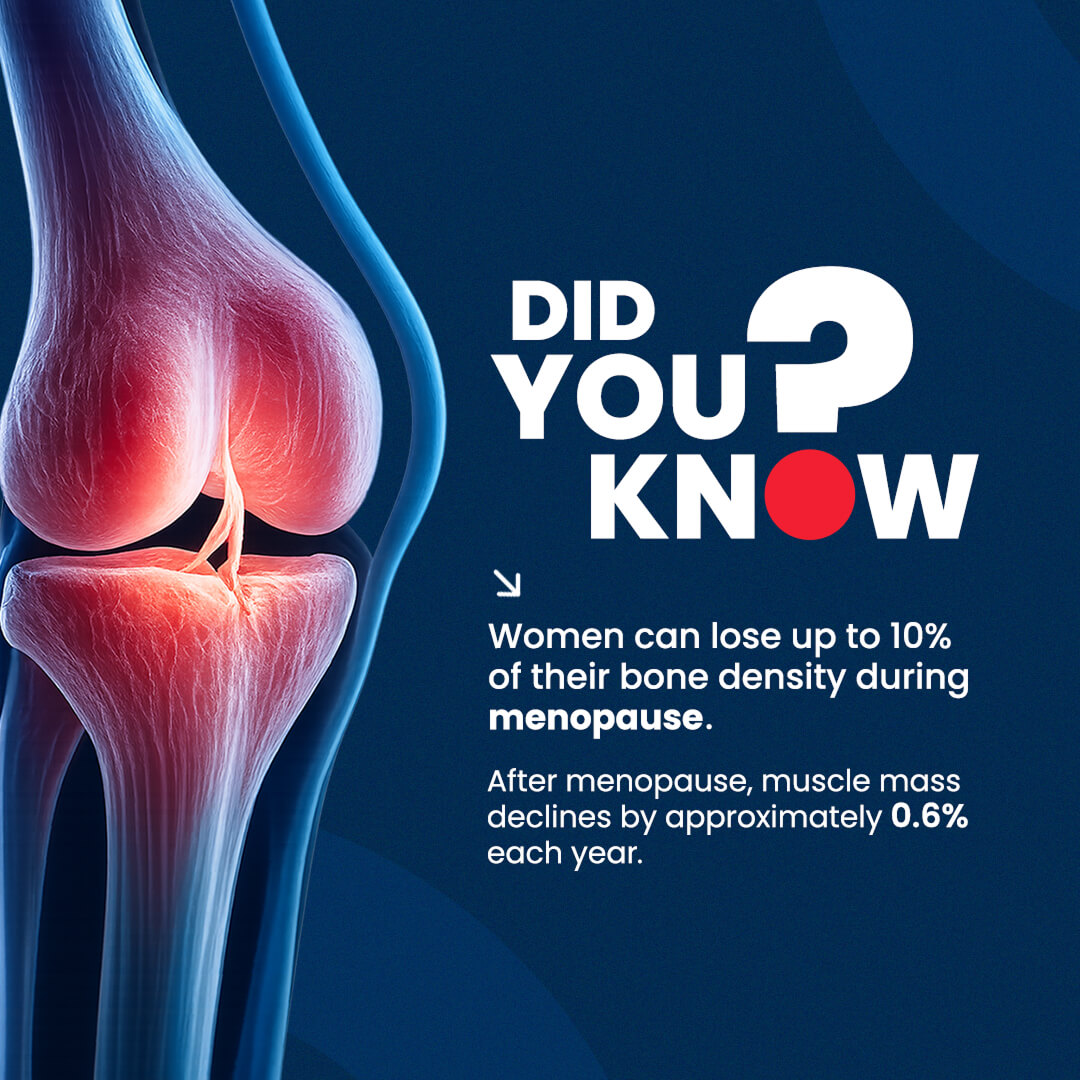
Menopause is often associated with hot flushes, sleep changes and mood symptoms, but its impact can go much deeper. As hormone levels shift, especially oestrogen, changes may also occur in bone strength, muscle mass and physical function.
These changes are not always obvious at first. A person may not feel their bone density declining, and early muscle loss can be easy to dismiss as “normal ageing”. However, understanding these changes early can help support stronger bones, better mobility and long-term health.
How Menopause Affects Bone Health
Oestrogen plays an important role in maintaining bone strength. Around menopause, lower oestrogen levels can increase bone loss, which may raise the risk of osteopenia or osteoporosis over time. Changes in hormone levels around menopause can impact bone density and bone strength.
Osteoporosis is often called a “silent” condition because many people do not know they have low bone density until they experience a fracture. This is why bone health assessment is important, especially for women with risk factors such as early menopause, family history of osteoporosis, previous low-trauma fracture, low vitamin D, thyroid or parathyroid conditions, diabetes, long-term steroid use, smoking or low calcium intake.
Why Muscle Health Matters Too
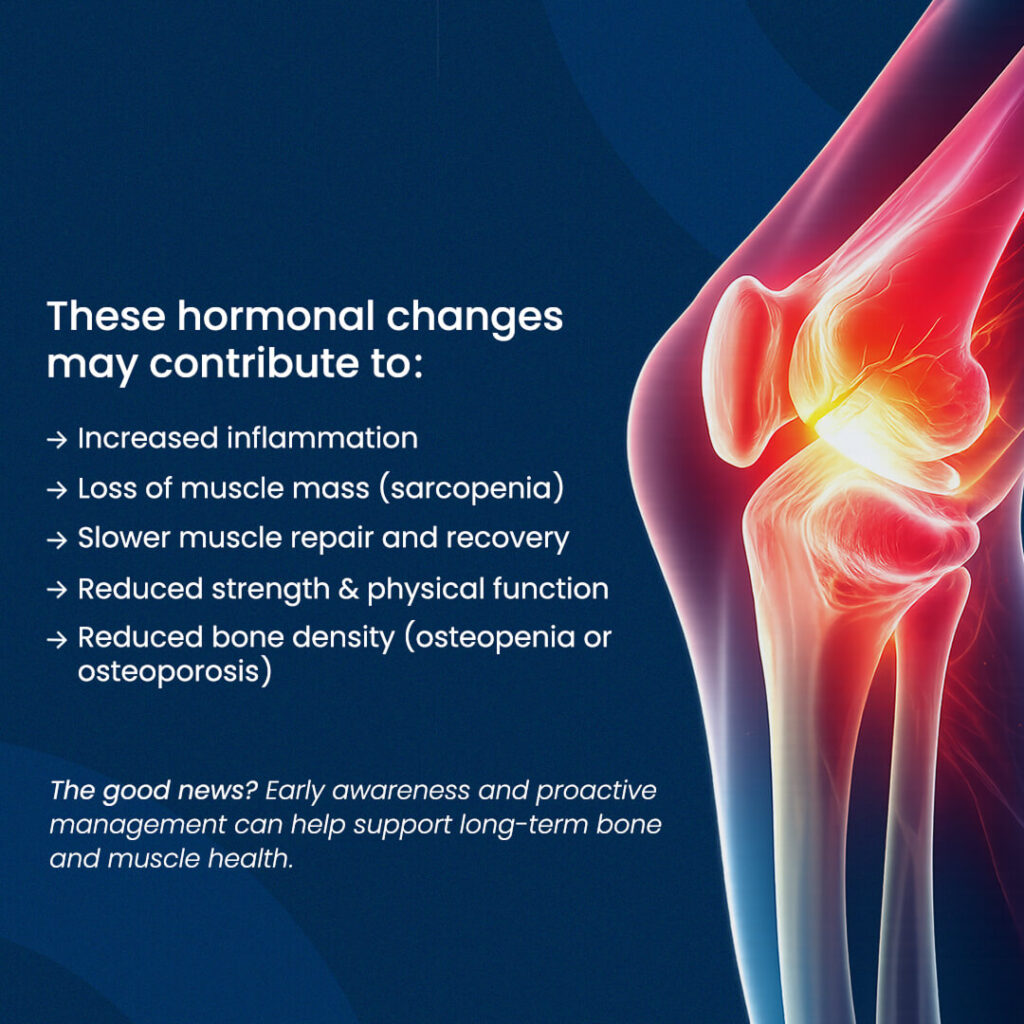
Bone and muscle health are closely connected. Muscles support movement, balance and stability, while bones provide the structure that allows the body to move and function. When muscle mass or strength declines, the risk of falls and reduced mobility can increase.
Menopause may contribute to changes in muscle strength, joint symptoms and overall musculoskeletal health. The decline in oestrogen during menopause can affect bone, joint and muscle health, and that evidence-based strategies such as exercise and menopausal hormone therapy may be considered depending on the individual.
This is why menopause-related care should not only focus on symptoms such as hot flushes. It should also consider long-term strength, movement and fracture prevention.
When Should Bone Health Be Checked?
A bone health assessment may be helpful if you are post-menopausal or approaching menopause and have additional risk factors. These may include:
- Early menopause before age 45
- A previous fracture from a minor fall or injury
- Family history of osteoporosis
- Long-term steroid medication use
- Low vitamin D or low calcium intake
- Thyroid, parathyroid, kidney, liver or diabetes-related concerns
- Loss of height or increasing back pain
- Reduced strength, balance or mobility
Bone mineral density testing may be recommended in some cases to help assess osteoporosis risk. Osteoporosis may be diagnosed in postmenopausal women or in men over 50 years of age when bone density results meet diagnostic criteria after considering age, sex, clinical risk factors, and overall fracture risk assessment.
How an Endocrinologist Can Help
Endocrinologists assess and manage hormone and metabolic conditions that can affect bone health, muscle function, balance, and fracture prevention.
At Brisbane Endocrine & Metabolic Specialists, assessment may involve reviewing menopause-related concerns, bone density results, vitamin D levels, thyroid or parathyroid function, fracture risk and other medical factors that may influence bone and muscle health.
The goal is to identify risks early and create a personalised management plan that supports stronger bones, better mobility and healthier ageing.
Take the Next Step
If you are experiencing menopause related changes, unexplained aches, reduced strength, concerns about osteoporosis, or abnormal bone density results, early assessment can help provide clarity.
Book an appointment with Brisbane Endocrine & Metabolic Specialists to discuss your bone, muscle and hormone health.