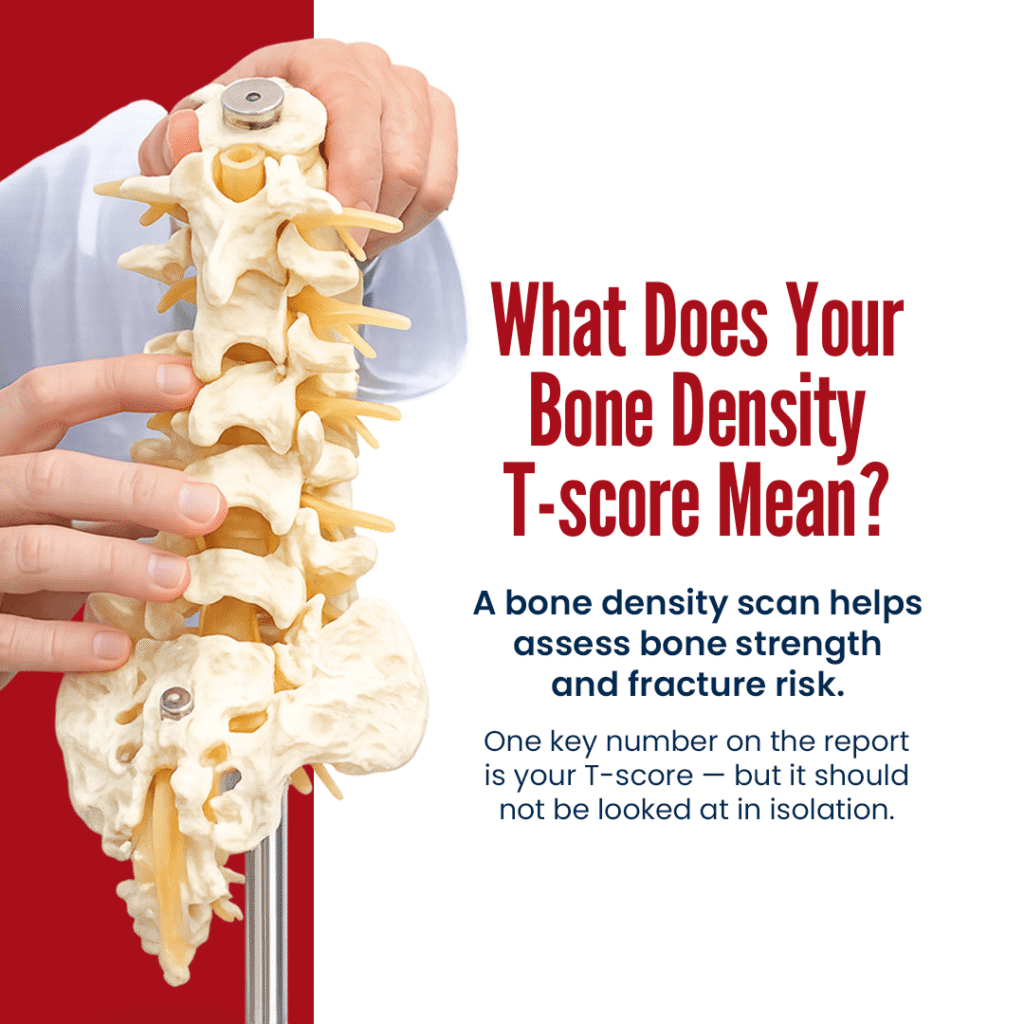
A bone density scan can provide important information about bone strength and osteoporosis risk. One of the key numbers included in the report is the T-score. Learn what your T-score means and how it is used when assessing bone health.
While the T-score is useful, it should not be interpreted on its own. Bone health and fracture risk are influenced by several factors, including age, previous fractures, medications, falls risk and underlying hormonal or metabolic conditions.
Understanding what the T-score means, along with the other factors that need to be considered, can help provide a more complete assessment of your overall bone health.
What Is a T-Score?
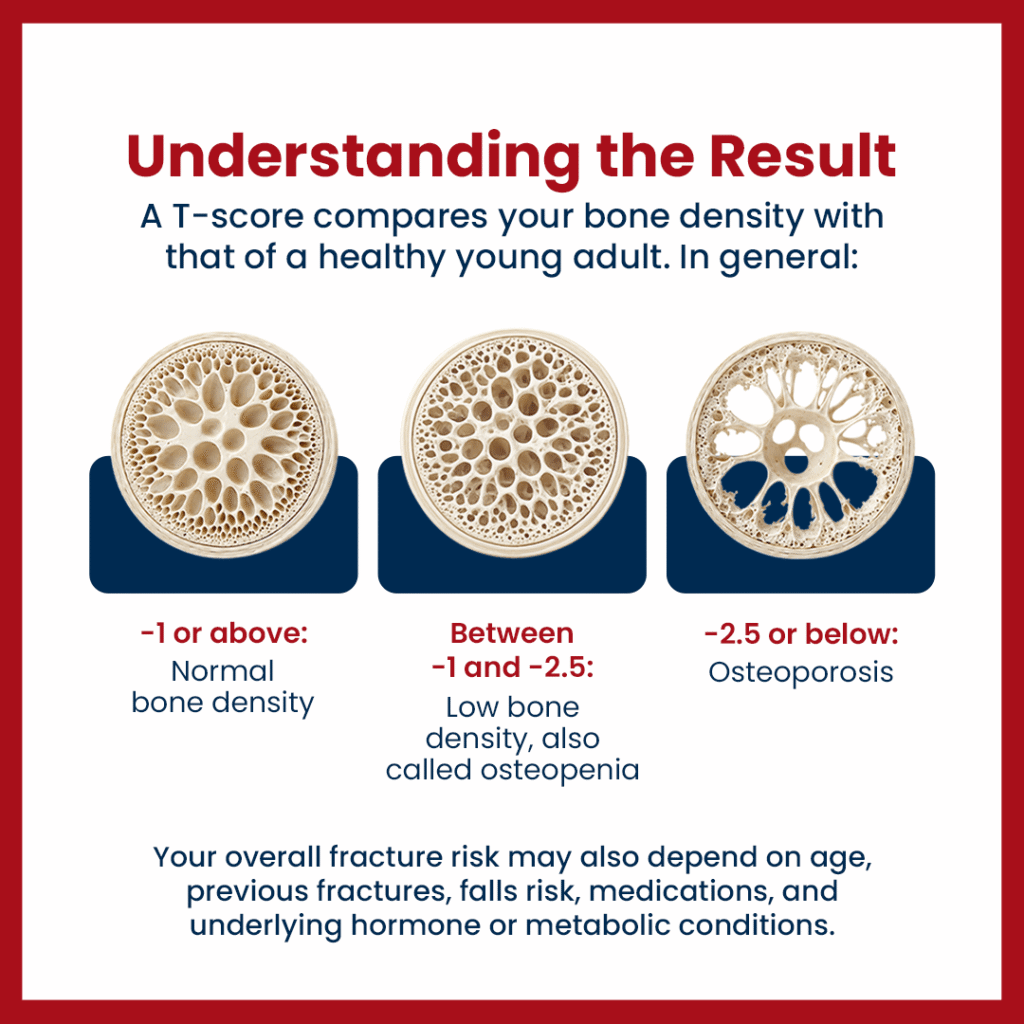
A T-score compares your bone mineral density with the bone density expected in a healthy young adult.
T-score classifications are generally used for postmenopausal women and men aged 50 years and older. In younger adults, Z-scores may be more appropriate when interpreting bone density.
In general, results are classified as:
- -1.0 or above: Normal bone density
- Between -1.0 and -2.5: Low bone density, also called osteopenia
- -2.5 or below: Osteoporosis
These categories help clinicians identify reduced bone density, but the number itself is only one part of the assessment.
Why Your T-Score Is Not the Whole Story
Two people with similar T-scores may not necessarily have the same fracture risk.
A previous minimal-trauma fracture can also indicate increased fracture risk even when the T-score is not within the osteoporosis range.
Other factors can significantly influence bone strength and the likelihood of experiencing a fracture, including:
- Age
- Previous low-trauma fractures
- Family history of osteoporosis
- Falls or balance concerns
- Long-term use of certain medications, particularly corticosteroids
- Menopause or early menopause
- Low vitamin D levels or inadequate calcium intake
- Thyroid or parathyroid conditions
- Diabetes and other metabolic conditions
This is why bone density results need to be considered alongside medical history and other individual risk factors.
Low Bone Density Does Not Always Cause Symptoms
Reduced bone density often develops without obvious symptoms.
A person may feel well and remain physically active while bone strength gradually declines. In some cases, osteoporosis is not identified until a fracture occurs.
Changes such as loss of height, persistent back pain or a fracture following a relatively minor fall may sometimes prompt further investigation.
Recognising risk factors earlier can allow bone health to be assessed before a significant fracture occurs.
Hormones and Metabolic Health Can Affect Your Bones
Bone is living tissue that is continuously being broken down and rebuilt. Hormones play an important role in maintaining this balance.
Changes in oestrogen around menopause can accelerate bone loss. Thyroid and parathyroid disorders can also affect the way bone is formed and maintained.
Other factors, including vitamin D levels, diabetes, certain medications and broader metabolic health, may also contribute to bone health concerns.
For this reason, an abnormal bone density result may require more than simply reviewing the T-score.
What Happens If Your T-Score Is Low?
A low T-score does not automatically determine what treatment or monitoring you need.
Further assessment may involve reviewing:
- Your bone density scan results
- Previous fractures
- Falls risk
- Family and medical history
- Current medications
- Vitamin D and calcium status
- Thyroid or parathyroid function
- Menopause and other hormonal factors
- Other conditions that may contribute to reduced bone strength
The aim is to understand why bone density may be reduced and what your overall fracture risk looks like, rather than focusing on one number alone.