
The parathyroid glands play an important role in maintaining the right balance of calcium in the body. Although calcium is often associated with strong bones, it is also essential for normal nerve signalling, muscle function and blood clotting.
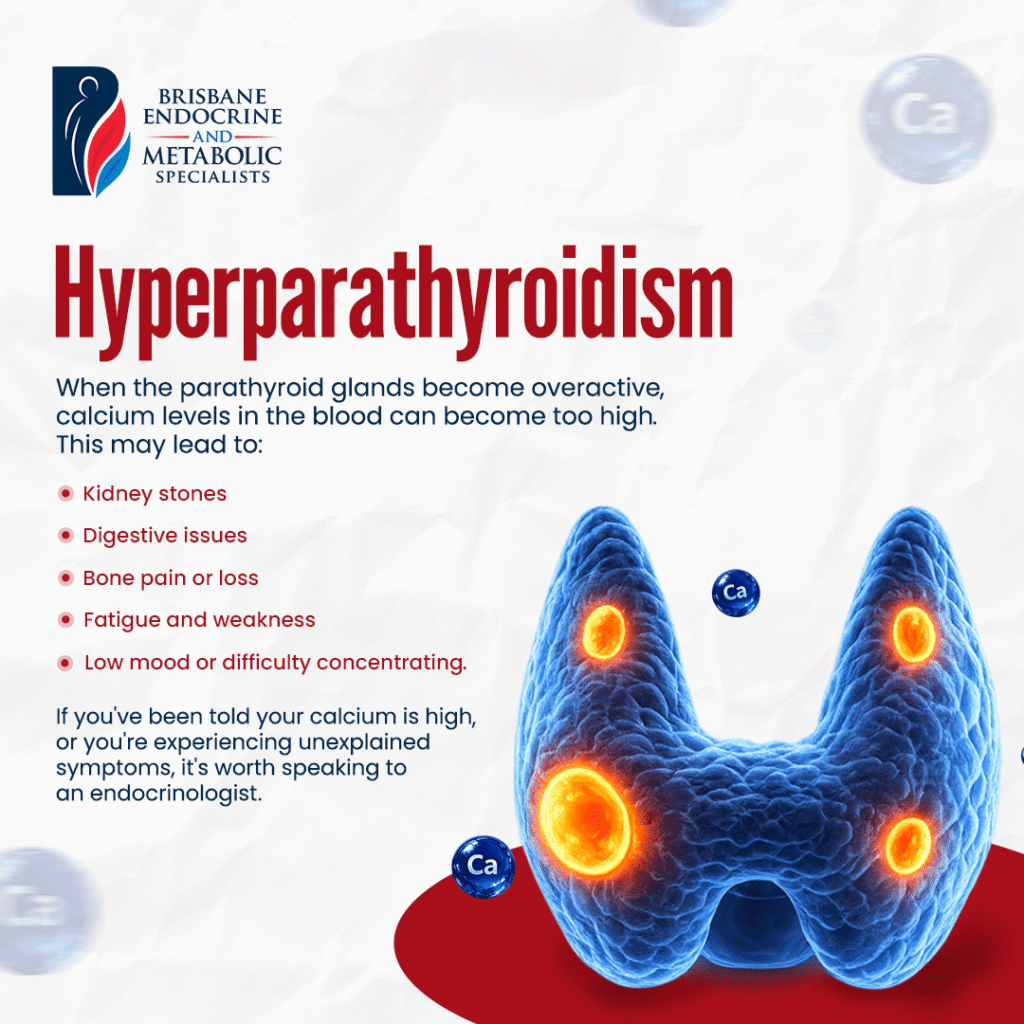
When the parathyroid glands become overactive, calcium levels in the blood can rise too high. This condition is known as hyperparathyroidism and may affect different parts of the body, including the bones, kidneys, digestive system and muscles.
Understanding the role of the parathyroid glands, and what can happen when calcium balance is disrupted, can help put abnormal calcium results and unexplained symptoms into context.
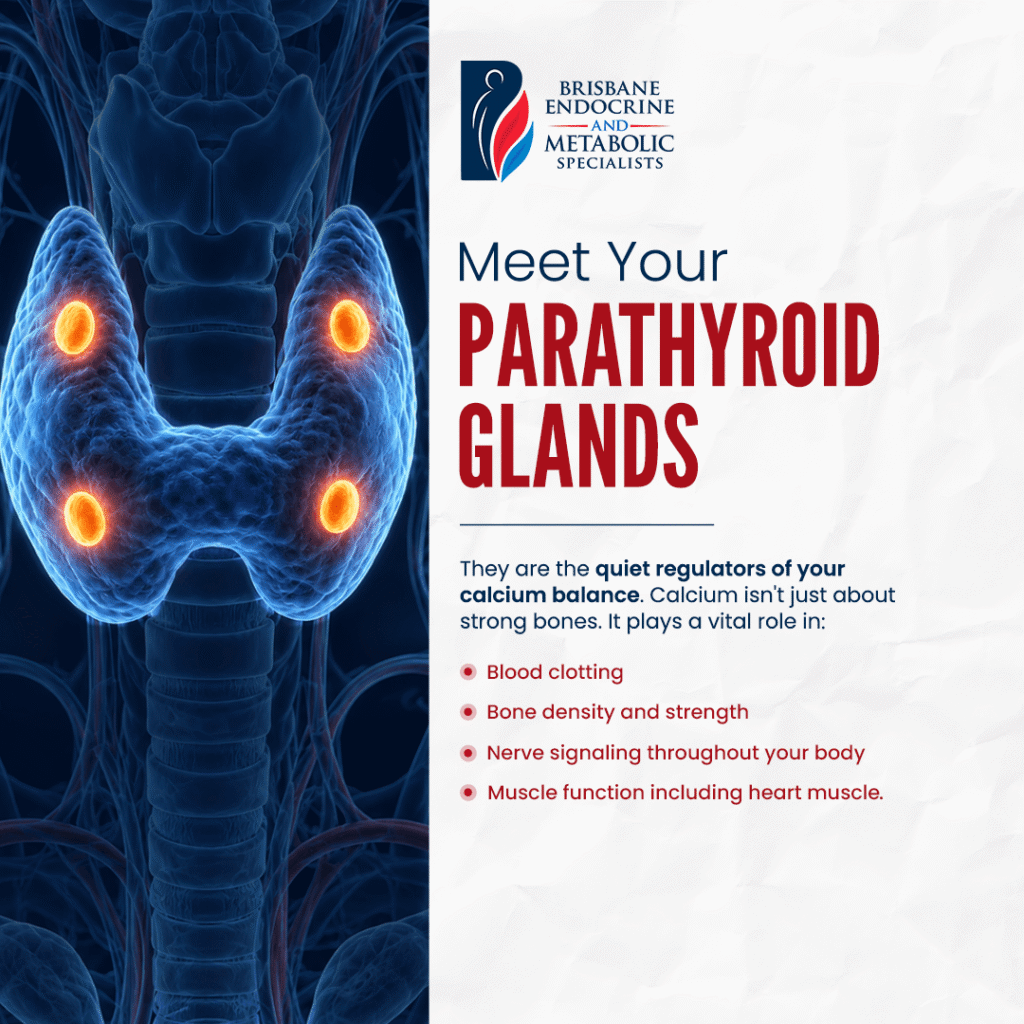
What Do the Parathyroid Glands Do?
The parathyroid glands are usually four small glands located in the neck. They produce parathyroid hormone (PTH), which plays an important role in regulating calcium levels in the blood and maintaining calcium balance in the body.
Calcium is needed for several important functions, including:
- Maintaining bone density and strength
- Supporting normal nerve signalling
- Helping muscles function, including the heart muscle
- Supporting normal blood clotting
By helping keep calcium levels appropriately regulated, PTH supports both bone health and normal body function.
What Is Primary Hyperparathyroidism?
Primary hyperparathyroidism occurs when one or more of the parathyroid glands become overactive and produce too much parathyroid hormone (PTH).
This excess PTH can cause calcium levels in the blood to become too high. The effects can vary from person to person, and symptoms may involve several different body systems rather than one specific area.
For this reason, a high calcium result may sometimes be an important clue that further assessment of parathyroid function is needed.
Possible Signs and Symptoms
High calcium levels associated with primary hyperparathyroidism may contribute to symptoms or health concerns such as:
- Kidney stones
- Digestive issues
- Bone pain or loss of bone strength
- Fatigue and weakness
- Low mood
- Difficulty concentrating
These symptoms can have many possible causes, so experiencing one or more of them does not necessarily mean that primary hyperparathyroidism is present.
However, if calcium levels are found to be high, further assessment may be needed to understand the cause and determine whether parathyroid hormone levels are contributing.
Why Calcium Balance Matters?
Calcium plays an important role in bone strength, as well as normal nerve and muscle function. When calcium regulation is disrupted, the effects can extend beyond the bones and may involve other systems in the body.
For this reason, calcium and parathyroid function may be considered as part of a broader assessment when investigating bone, kidney or metabolic concerns.
What If You Have Been Told Your Calcium Is High?
A high calcium result does not, on its own, explain why the level is elevated.
Assessment may include blood tests to check calcium and parathyroid hormone (PTH) levels, along with kidney function and vitamin D. Depending on the results and clinical picture, urine calcium testing and a bone density assessment may also be considered.
These findings are reviewed alongside your symptoms, medical history and other relevant clinical information to help identify the cause of the high calcium level and determine the most appropriate next step.
How Is Primary Hyperparathyroidism Managed?
Management depends on factors such as calcium levels, symptoms, bone health, kidney health and whether complications are present.
For some people, regular monitoring of calcium levels and related health measures may be appropriate. In other cases, particularly where certain symptoms or complications are present, surgery to remove the affected parathyroid gland or glands may be recommended.
Treatment decisions are based on the individual clinical picture and should be discussed with the treating specialist.