
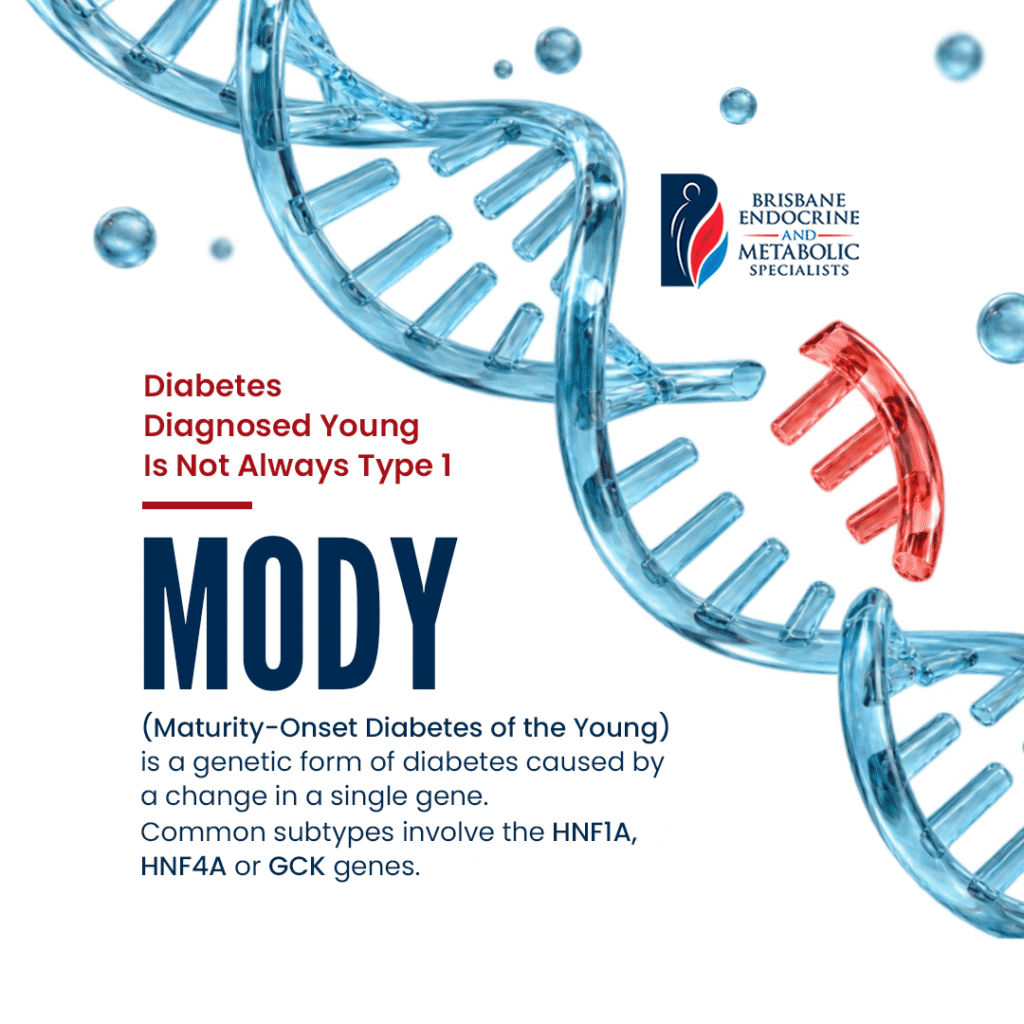
Maturity-Onset Diabetes of the Young (MODY) refers to a group of inherited forms of diabetes caused by a change in a single gene affecting pancreatic beta-cell function.
Unlike Type 1 diabetes, MODY is not typically caused by autoimmune destruction of insulin-producing cells. It also differs from conventional Type 2 diabetes, which commonly involves insulin resistance.
MODY is frequently diagnosed in younger individuals and may be mistaken for Type 1 or Type 2 diabetes. Identifying the specific subtype is important because it can influence treatment and the assessment of family members.
What Is MODY?
MODY is a form of diabetes caused by an inherited genetic change that affects how the body regulates blood glucose.
Unlike Type 1 diabetes, it is not usually caused by an autoimmune process. It also differs from typical Type 2 diabetes, which is more commonly associated with insulin resistance and a combination of genetic and lifestyle factors.
Because MODY can look similar to other types of diabetes, it may not always be recognised immediately.
When Should MODY Be Considered?
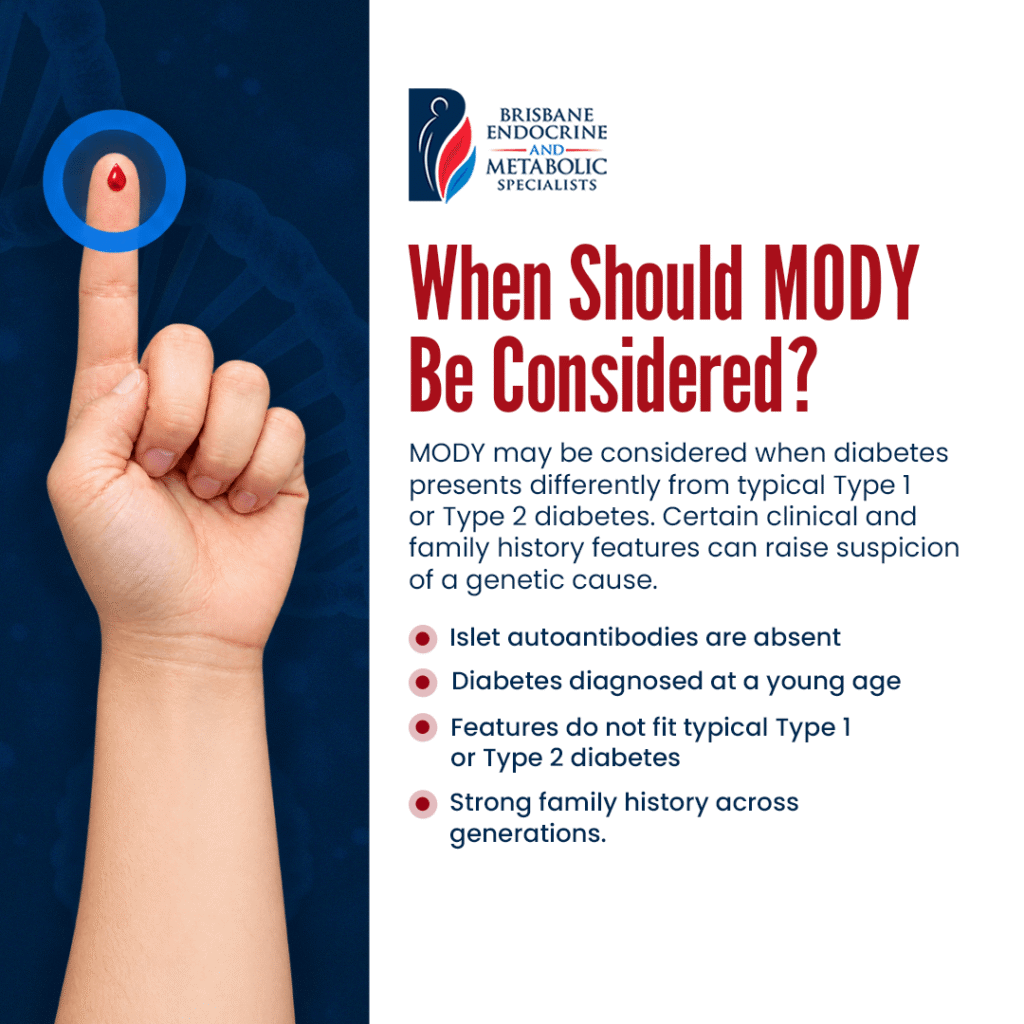
MODY may be considered when the clinical presentation does not fit the typical pattern of Type 1 or Type 2 diabetes.
Features that may raise suspicion include:
- Diabetes diagnosed at a young age, often before 35 years
- A family history of diabetes affecting successive generations
- Negative islet autoantibodies
- Evidence of preserved endogenous insulin production
- Absence of marked insulin resistance or other typical features of Type 2 diabetes
None of these findings confirms MODY independently. Specialist assessment is needed to determine whether genetic testing is appropriate.
Why Does the Correct Diagnosis Matter?
Identifying the correct MODY subtype can significantly influence treatment decisions.
For example:
GCK-MODY: Often causes mild, stable elevations in blood glucose and usually does not require glucose-lowering medication outside specific circumstances, including pregnancy.
HNF1A-MODY: Individuals may respond particularly well to low-dose sulfonylurea medication.
HNF4A-MODY: May also respond to sulfonylureas, although treatment needs can change over time.
Recognising these differences can help avoid unnecessary treatment and support more appropriate long-term management.
How Is MODY Diagnosed?
Assessment for suspected MODY involves reviewing the age at diagnosis, family history, clinical presentation and previous diabetes investigations.
Tests may include:
- Blood glucose and HbA1c measurements
- Islet autoantibody testing
- C-peptide testing to assess endogenous insulin production, where appropriate
- Genetic testing when clinical findings suggest monogenic diabetes
Genetic testing can help confirm MODY and identify the responsible gene, which may guide treatment and inform whether relatives should also be offered assessment.
Treatment Can Vary
Not all diabetes diagnosed in younger people is Type 1 or Type 2 diabetes. Where the clinical presentation is unusual, particularly with a strong family history, monogenic diabetes such as MODY may need to be considered.
Accurate diagnosis can support appropriate treatment, help avoid unnecessary therapy and provide important information for family members.
Specialist assessment can help determine whether further investigation or genetic testing is warranted.
Why an Accurate Diagnosis Matters?
Diabetes diagnosed at a young age is not always Type 1 diabetes.
When the clinical pattern is unusual, particularly when there is a strong family history across generations, MODY may need to be considered.
Specialist assessment and genetic testing can help clarify the diagnosis and guide ongoing management.