
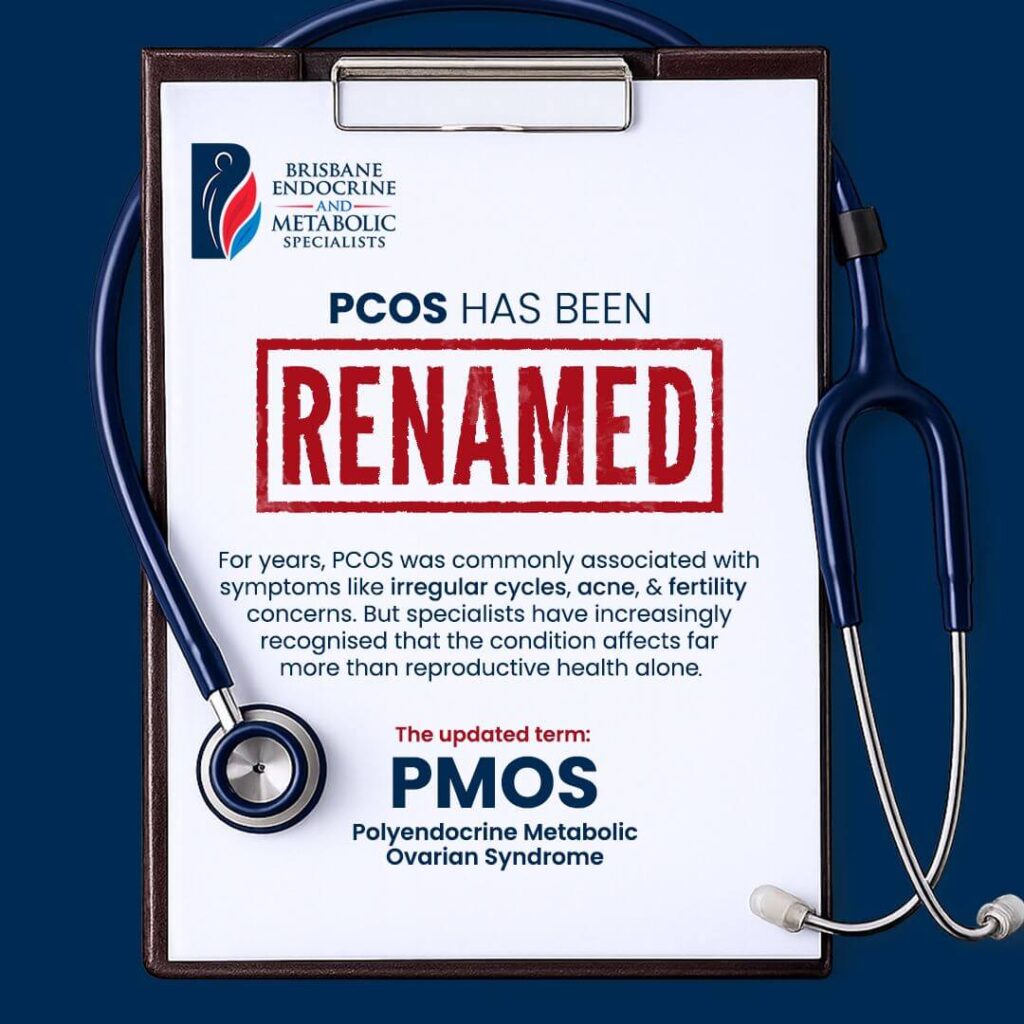
Polycystic Ovary Syndrome, widely known as PCOS, has now been renamed Polyendocrine Metabolic Ovarian Syndrome (PMOS).
The change reflects a major shift in how the condition is understood. For many years, PCOS was commonly associated with ovarian cysts, irregular periods, acne and fertility concerns. However, specialists now recognise that the condition is far broader, involving multiple hormonal and metabolic systems across the body.
The name change was announced in May 2026 after a long international collaboration involving experts, patient groups and professional organisations. The new term, PMOS, is designed to better reflect the condition’s endocrine and metabolic nature, rather than focusing mainly on the ovaries.
Why was PCOS renamed PMOS?
The term “polycystic ovary” has often caused confusion, as it suggests the condition is mainly about ovarian cysts. In reality, many people with the condition do not have ovarian cysts as the central issue.
PMOS recognises that the condition can involve:
- Hormone fluctuations
- Insulin resistance
- Weight and metabolic health concerns
- Skin symptoms such as acne or excess hair growth
- Menstrual and fertility concerns
- Mental health and emotional wellbeing
- Longer-term cardiovascular and metabolic risk
This is why the new name is considered more accurate. It moves the focus away from “cysts” and toward the broader hormone and metabolic changes that can affect long-term health. The U.S. Endocrine Society notes that PMOS affects around one in eight women worldwide and is associated with weight gain, metabolic health, mental health, skin, and reproductive changes.
PMOS is more than a reproductive condition
PMOS can still involve reproductive symptoms, including irregular cycles, ovulation concerns and fertility difficulties. But these symptoms are only one part of the condition.
The broader health picture may include insulin resistance, type 2 diabetes risk, cardiovascular risk factors, obstructive sleep apnoea, fatty liver disease and mood-related concerns.
Rather than focusing only on periods, fertility, or ovarian appearance, PMOS encourages a more holistic view of the body, focusing on endocrine and metabolic health parameters.
The role of insulin resistance
Insulin resistance is one of the key metabolic features often associated with PMOS.
When the body becomes less responsive to insulin, it may produce more insulin to maintain normal blood glucose levels. Over time, this can influence androgen levels, weight regulation, ovulation and broader metabolic risk.
Some people mainly notice cycle changes or acne, while others may experience weight-related concerns, fatigue, glucose changes, or deterioration in metabolic parameters.
Why specialist assessment matters
Because PMOS can affect multiple systems, symptoms alone do not always tell the full story.
A proper assessment may consider:
- Menstrual and ovulation patterns
- Androgen-related symptoms such as acne or excess hair growth
- Metabolic markers include glucose tolerance, androgen profile, and cholesterol levels
- Weight and cardiovascular risk factors
- Sleep symptoms, including possible obstructive sleep apnoea
- Mood, anxiety and quality of life concerns
This is especially important because symptoms can overlap with other endocrine conditions, including thyroid disorders, adrenal conditions, and other hormonal abnormalities.
Does the name change affect diagnosis or treatment?
The condition itself has not changed. The name has changed to better reflect what clinicians and researchers already understand about its broader impact.
During the transition period, both PCOS and PMOS may continue to appear in medical information and patient records. For patients, the most important message is this: PMOS is not just about ovarian cysts or fertility. It is a complex endocrine and metabolic condition that may require long-term, individualised care.
At Brisbane Endocrine & Metabolic Specialists, assessment of complex hormone and metabolic conditions is an important part of helping patients understand what may be happening beneath the surface.