
Prolactin is a hormone produced by the pituitary gland. When prolactin levels in the blood are higher than expected, there can be several possible reasons, and one potential cause is a prolactinoma.
A prolactinoma is a benign growth of the pituitary gland that produces too much prolactin. Higher prolactin levels can affect normal hormone balance and may lead to changes in reproductive health, sexual function and other aspects of wellbeing.
Because elevated prolactin levels do not have the same cause in everyone, appropriate assessment is important to understand what may be contributing to the result and whether further investigation is needed.

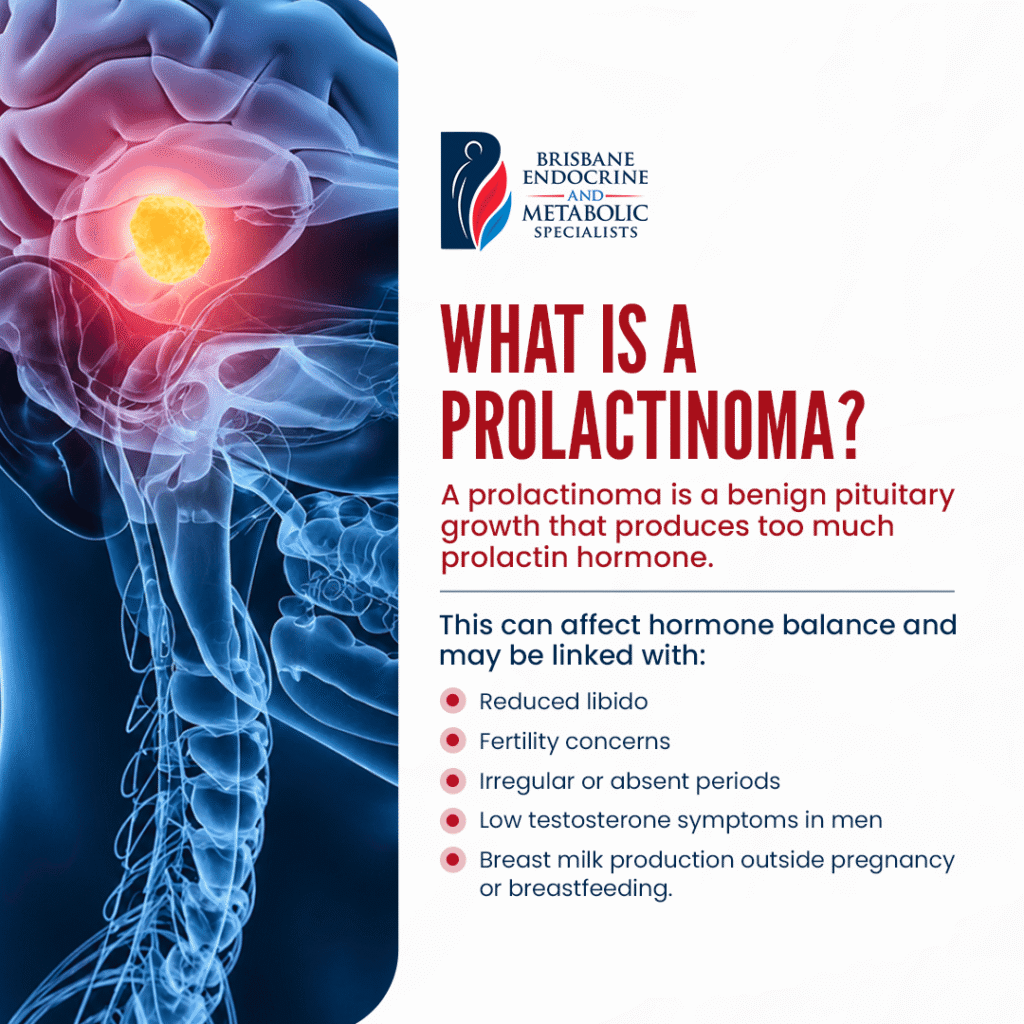
What Is a Prolactinoma?
A prolactinoma is a benign pituitary growth that produces excessive amounts of the hormone prolactin.
The pituitary gland is responsible for producing hormones that help regulate several functions throughout the body. When a prolactinoma causes prolactin levels to rise, this can interfere with normal hormone balance.
The effects can vary between individuals, which is why prolactin results need to be considered alongside symptoms and other clinical information.
What Can High Prolactin Levels Affect?
Higher-than-expected prolactin levels can affect hormone function in both women and men.
Possible concerns may include:
- Reduced libido
- Fertility concerns
- Irregular or absent periods
- Symptoms associated with low testosterone in men
- Breast milk production outside pregnancy or breastfeeding
Not everyone with elevated prolactin will experience the same symptoms, and these concerns can also occur for reasons unrelated to a prolactinoma.
This is why symptoms alone cannot determine the cause of an elevated prolactin level.
High Prolactin Does Not Always Mean Prolactinoma
An elevated prolactin result does not automatically mean that a person has a prolactinoma.
The cause of high prolactin levels can differ from one person to another, so the result needs to be assessed in the context of the individual’s medical history, medications, symptoms and other hormone results.
Further assessment can help determine whether the pituitary gland may be involved or whether another factor needs to be considered.
Why Hormone Balance Matters?
The pituitary gland plays an important role in coordinating hormone function throughout the body.
Because prolactin is part of this broader hormonal system, persistently elevated levels may be associated with changes in reproductive and sexual health.
For example, some people may notice changes in their menstrual cycle, fertility or libido, while men may experience symptoms associated with lower testosterone levels.
Understanding how prolactin fits into the broader hormonal picture is an important part of determining what may be causing these changes.
What Happens If Your Prolactin Level Is High?
If a blood test shows that prolactin levels are higher than expected, further review may be needed.
Assessment may include:
- Reviewing blood test results
- Reviewing current medications
- Assessing symptoms and medical history
- Checking how other hormones are functioning
- Pituitary imaging where appropriate
These steps can help determine whether the elevated prolactin level may be related to a prolactinoma or whether another explanation should be considered.
The aim is to identify the underlying cause rather than relying on a single blood test result.
Why Is Pituitary Imaging Sometimes Considered?
Because prolactin is produced by the pituitary gland, imaging of the pituitary may form part of the assessment when clinically appropriate.
Imaging can provide additional information about the pituitary gland and help specialists investigate whether a pituitary growth such as a prolactinoma may be contributing to elevated prolactin levels.
Whether imaging is required will depend on the individual’s results and overall clinical assessment.
Why Specialist Review Is Important?
High prolactin levels require appropriate assessment because the underlying cause is not always the same for everyone.
An endocrinologist can consider the prolactin result alongside symptoms, medications, other hormone levels and, where appropriate, pituitary imaging.
This broader assessment can help clarify whether a prolactinoma or another endocrine issue may be contributing to the elevated prolactin level and guide the most appropriate next step.