
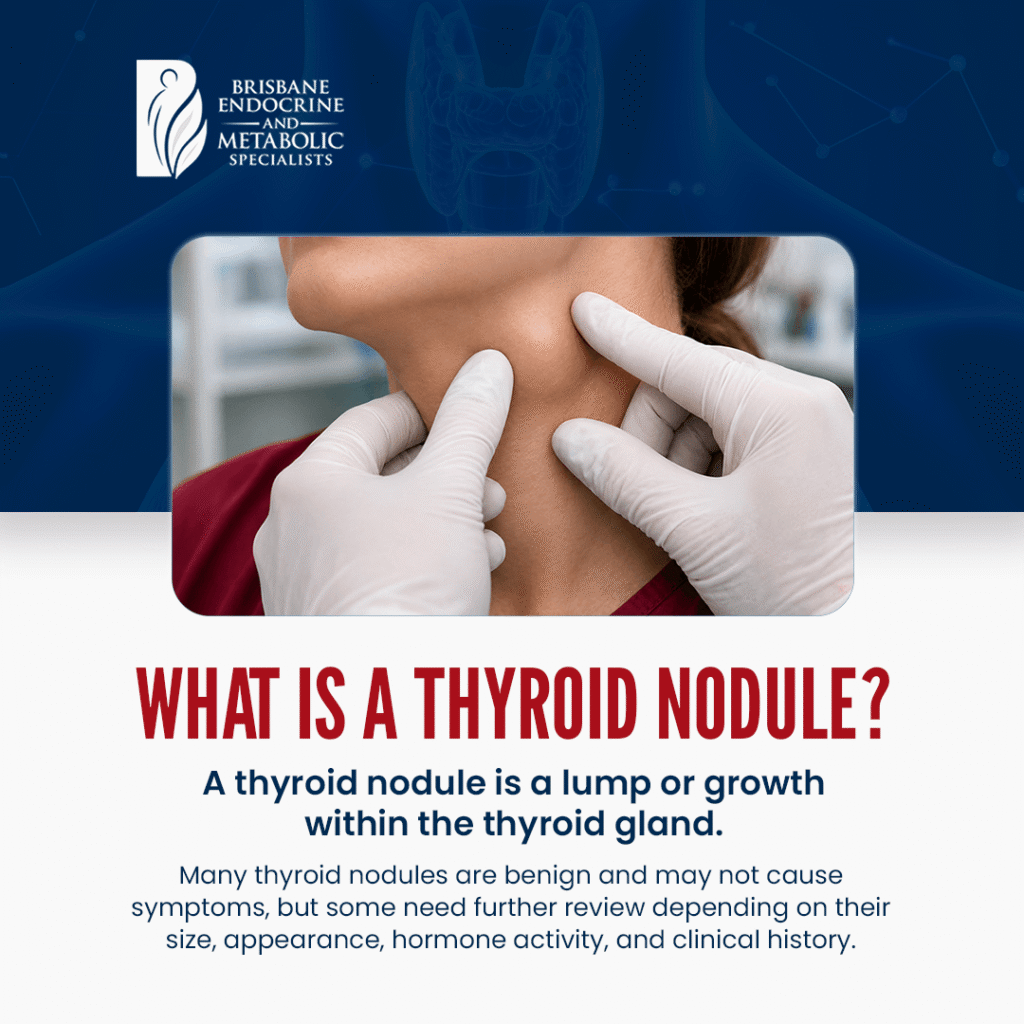
Thyroid nodules are lumps or areas of growth within the thyroid gland. They are common, and most are benign. Some are found during a neck examination, while others are discovered incidentally on imaging.
Although many thyroid nodules do not cause problems, some need further assessment depending on their size, appearance, hormone activity and other clinical factors.
What Is a Thyroid Nodule?
The thyroid is a butterfly-shaped gland at the front of the neck that produces hormones involved in metabolism and other body functions. A thyroid nodule is a distinct lump or growth within this gland. A person may have one nodule or several, and many cause no noticeable symptoms.
Possible Signs and Symptoms
Most thyroid nodules do not cause symptoms. When symptoms occur, they may include:
A lump or swelling in the neck
Pressure or fullness in the neck
Difficulty swallowing or voice changes
Symptoms of an overactive thyroid if the nodule produces excess thyroid hormone
These symptoms can have other causes, so they do not confirm the presence of a thyroid nodule on their own.
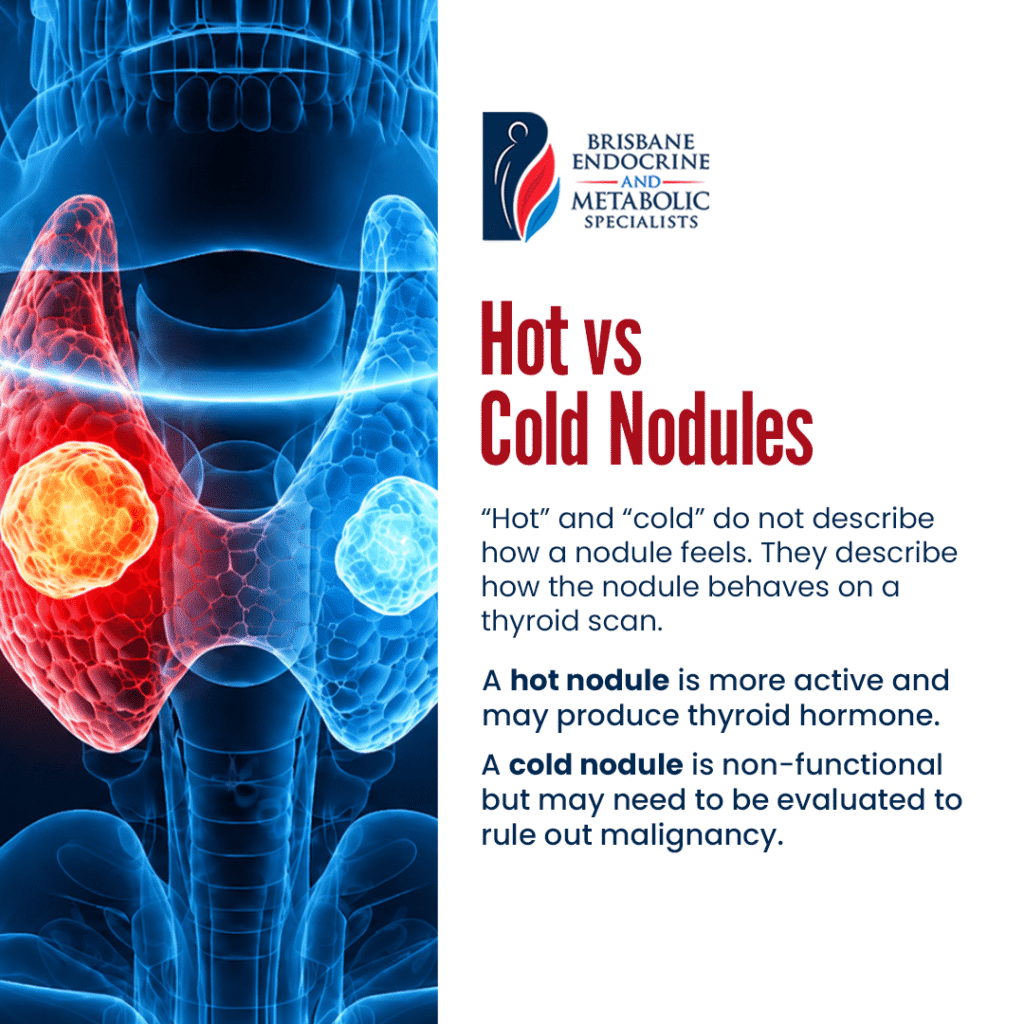
What Are Hot and Cold Thyroid Nodules?
A hot thyroid nodule shows increased activity on a thyroid uptake scan and may produce thyroid hormone independently of the body’s normal regulation.
A cold thyroid nodule shows reduced activity compared with the surrounding thyroid tissue and generally does not produce excess thyroid hormone.
Does a Cold Nodule Mean Cancer?
A cold thyroid nodule does not necessarily mean cancer. It simply means that the nodule does not take up iodine or tracer on a thyroid scan.
A thyroid scan alone cannot definitively determine whether a nodule is benign or cancerous. Assessment involves several factors, including the nodule’s size, ultrasound appearance, personal and family medical history, and other risk factors. Depending on these findings, a fine needle aspiration (FNA) biopsy may be recommended to assess the likelihood of cancer and guide appropriate follow up.
How Are Thyroid Nodules Assessed?
Assessment typically includes thyroid function tests and a thyroid ultrasound.
Blood tests measure thyroid-stimulating hormone (TSH), with additional hormone testing when indicated. Ultrasound provides information about the nodule’s size, structure and features that may influence the need for a biopsy.
When TSH is low or suppressed, a thyroid uptake scan may be recommended to determine whether a nodule is producing excess thyroid hormone.
When Might a Biopsy Be Needed?
Fine-needle aspiration (FNA) biopsy may be recommended for nodules with certain ultrasound characteristics and size thresholds.
Nodules with suspicious ultrasound features may require further investigation, while those with a low-risk appearance may be suitable for monitoring.
A biopsy is not required for every thyroid nodule, and nodules confirmed to be hyperfunctioning generally do not need routine FNA.
How Are Thyroid Nodules Managed?
Management depends on the findings from assessment. Some nodules only require follow-up, while further management may be considered if a nodule produces excess thyroid hormone, causes pressure or swallowing symptoms, changes significantly, or has concerning ultrasound or biopsy findings.
Understanding the Whole Picture
Most thyroid nodules are benign and do not require immediate treatment. Appropriate assessment helps identify which nodules can be monitored and which may require further investigation or management.
If you have been diagnosed with a thyroid nodule or have abnormal thyroid function results, your treating clinician can advise whether specialist assessment is appropriate.